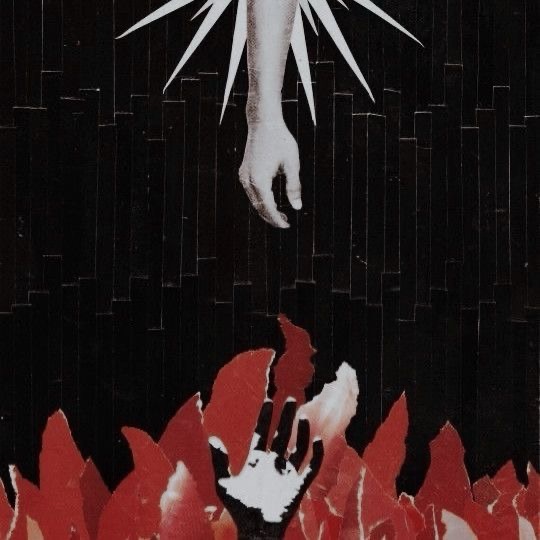
As I’ve been deepening my walk with Jesus and studying the Scriptures more intently, I’ve stumbled upon truths about life after death that have completely reshaped the way I see both heaven and earth.
When the heart grows still and the final breath departs, a mystery unfolds that no living eye has seen and yet every soul must one day know. What lies beyond that veil? The poets have sung, the prophets have spoken, and the Scriptures, when read with care, paint a vision neither of myth nor dread, but of justice, mercy, and divine order.
I write not as one claiming to know all things, but as one who, like Job, has “heard of Him by the hearing of the ear” and longs to see Him face to face. The Literal Standard Version (LSV) gives language to this longing, while the Book of Enoch, though not canon, offers ancient echoes that illuminate the shadows where our curiosity dwells.
Sheol: The First Mystery
In the Hebrew tongue, the place of the dead is called Sheol. It is not the fiery inferno of modern imagination, nor the empty sleep some presume. It is the realm beneath, the unseen. The psalmist cried,
“If I ascend the heavens—you are there;
If I make my bed in Sheol, behold, you are there.” (Psalm 139:8, LSV)
Sheol is the meeting ground of all who die, righteous and unrighteous alike. But the Scriptures suggest their experiences there differ as light from shadow. Proverbs whispers,
“Sheol and Abaddon are not satisfied;
So the eyes of man are not satisfied.” (Proverbs 27:20, LSV)
The word Abaddon means destruction, a region within death’s domain. To some it is torment, to others waiting; yet even there, the presence of God is not barred.
Abraham’s Bosom: The Rest of the Righteous
In the days of Jesus, this unseen world was known in Greek as Hades. He spoke of it not as legend, but as reality: two realms divided by a chasm.
“And the poor man died and was carried away by the messengers to the bosom of Abraham… and the rich man also died and was buried; and having lifted up his eyes in Hades, being in torments, he sees Abraham afar off, and Lazarus in his bosom.” (Luke 16:22-23, LSV)
The “bosom of Abraham” is a Hebrew picture of intimate fellowship, a banquet of belonging. The righteous recline beside the patriarch of faith; their rest is peace. Across the gulf lies the place of thirst and regret, where the unrighteous awaken to the truth they refused to see.
To me, this scene is not allegory. It is a window. For the same God who judges with fire also welcomes with open arms those who trusted Him in life.
The Descent of Christ and the Rising of Hope
The apostles spoke of Christ descending into “the lower parts of the earth.” (Ephesians 4:9, LSV) Peter adds that He “preached also to the spirits in prison.” (1 Peter 3:19, LSV)
The Book of Enoch, written centuries before, describes hollow places within a great mountain—separate abodes for the righteous and the wicked until the Day of Judgment. (1 Enoch 22)
When Christ entered death, I believe He crossed that chasm, proclaiming victory over the accuser. He led the faithful from the waiting of Sheol into the presence of the Father. The empty tomb was not only His, it was theirs.
The Temporary Heaven and the Waiting Saints
Revelation opens heaven’s doors for a moment and lets us listen.
“And when He opened the fifth seal, I saw under the altar the souls of those having been slain because of the word of God… and they cried with a great voice, saying, ‘Until when, O Master, holy and true, do You not judge and avenge our blood?’” (Revelation 6:9-10, LSV)
They are awake, aware, and waiting. They remember their lives, they speak, they hope. This is what I call the temporary heaven, not because it is lacking, but because Scripture promises a still greater restoration: the New Heavens and the New Earth.
As C.S. Lewis wrote:
“The curtain rises on an unimaginable chapter… and every chapter will be better than the one before.”
The Abyss and the Fallen Ones
Below, there is another depth the prophets barely name—the Abyss, the Tartarus, the pit where rebellious angels are held.
“For if God did not spare messengers who sinned, but having cast them down to Tartarus, delivered them up to chains of thick gloom…” (2 Peter 2:4, LSV)
Enoch tells us that these were the Watchers—those who transgressed the boundary between heaven and earth. (1 Enoch 6–10) Their imprisonment is a warning: even celestial beings cannot escape divine justice.
And yet, above all these depths and chambers, one truth resounds—the sovereignty of God. There is no corner of existence where His word does not reach.
The End of Death Itself
At the final judgment, John saw a throne of white fire.
“And death and Hades were cast into the lake of the fire this is the second death.” (Revelation 20:14, LSV)
This, I believe, is not annihilation of being, but of rebellion. Evil is unmade; corruption consumed. The faithful inherit not clouds and harps but earth renewed.
“And I saw a new heaven and a new earth… and He shall wipe away every tear from their eyes.” (Revelation 21:1-4, LSV)
Here ends the long exile of the soul. No more Sheol, no more Abaddon, no more waiting. God dwells with His people, and the former things pass away.
What I Believe
I believe that when we die, the soul steps from the visible into the unseen first into the presence of the Lord if we are His, or into the place of waiting for those who rejected Him. I believe Christ broke the gates of death and will one day erase death itself. I believe that all Scripture, from Job’s cry in the ashes to John’s vision on Patmos, points to a God who conquers despair with love.
And when that day comes, as the poet wrote, “Death shall be no more; Death, thou shalt die.”
As I Reflect
If you have ever stood by a grave and wondered what happens next, take heart: you are not staring into an abyss, but into a passage. The body returns to dust; the spirit returns to God who gave it. And one day, both will rise renewed.
Our hope is not that we escape the world, but that the world itself will be redeemed. Until then, we walk in faith, echoing Job’s ancient confidence:
“And after my skin has been thus destroyed, yet from my flesh I see God.” (Job 19:26, LSV)
The veil will lift. The Judge will call. And love, the oldest power in heaven, will have the final word.