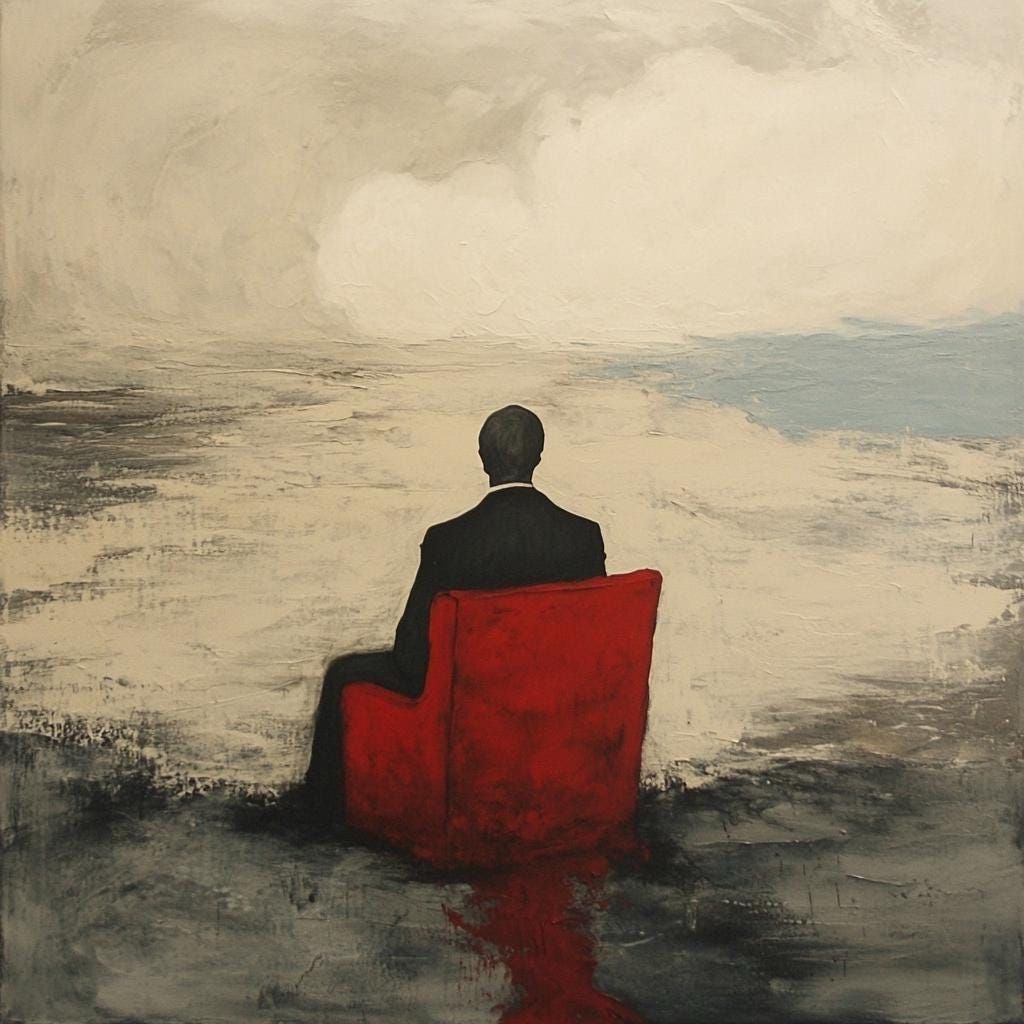
An Essay on Consciousness, Accountability, and Freedom
Instead of calling people bad, wrong, or evil, what if you saw them for what they truly are; limited?
A person can only act from the level of consciousness they stand upon. They cannot reach higher than their awareness allows.
When you begin to see this, judgment fades. Their cruelty no longer feels personal, and their words no longer pierce the same way. Because you realize they are only reflecting the walls of their own mind.
And here is the truth. The more your consciousness expands, the less fault you find in others.
Forgiveness does not mean they were right. It means you refuse to chain yourself to their limits.
That is real freedom. Not to excuse, not to forget, but to see through. To understand that nothing weakens you more than hate, and nothing elevates you more than understanding.
The Awakening
It isn’t until recently, of this very writing, that I’ve come to understand and articulate those words. For much of my life, I believed it was my duty to teach, to guide, to inform, to help people see what they refused to acknowledge. I mistook my passion for truth as purpose, and my insight as responsibility. But what I have learned, painfully, intimately, is that you cannot awaken a soul that is committed to its own slumber.
The person who has taught me the hardest lesson of my life did not do so through wisdom, but through wounding. They taught by absence, by their inability to see fault in themselves, by their refusal to face the devastation they caused. It was through their blindness that my own eyes began to open.
The Mirage of Moral Superiority
For years, I tried to reason. To extend grace beyond what was healthy. To explain, to correct, to forgive, again and again, believing that understanding would soften hearts. Yet what I encountered instead was a wall built from self-pity, projection, and pride. Their apologies were wrapped in blame, their empathy conditional, their remorse theatrical.
They demanded that their feelings be honored, always, completely, while disregarding the pain they inflicted. They cloaked manipulation in passivity and called it emotion. And when accountability arose, they recoiled as though truth were cruelty itself.
C. S. Lewis once wrote, “You can’t go back and change the beginning, but you can start where you are and change the ending.” For a long time, I hoped that the ending could change for both of us. But now I see that growth cannot occur in a soul that has sworn allegiance to its own innocence.
The Sacred Mirror of Fault
I have found that the truest growth happens not when I am affirmed, but when I am confronted, not when I am right, but when I am wrong. Every time I face my fault, I gain a measure of freedom. To see the truth about oneself, without collapsing under shame or fleeing into denial, is to participate in God’s refining fire.
The book of Proverbs reminds us:
“Whoever loves discipline loves knowledge, but he who hates reproof is stupid.”
— Proverbs 12:1, ESV
It’s not a gentle verse, but it’s a truthful one. Correction is not cruelty; it is creation in motion. Every mistake becomes an invitation to ascend — to see from a higher plane of consciousness where humility becomes the architecture of wisdom.
The Prison of Projection
Those who refuse to look inward must find someone else to carry their guilt. And so they project, distort, and accuse, because their inner world is too dark to face. What they call truth is often defense; what they call love is often control. They cannot heal what they will not name.
In recognizing this, my anger began to dissolve. Their cruelty no longer seemed personal, not because it didn’t hurt, but because I understood the source. They were acting from the level of consciousness they stood upon. And I was acting from mine.
The Apostle Paul wrote,
“For now we see in a mirror dimly, but then face to face.”
— 1 Corinthians 13:12, ESV
We are all mirrors, dim and incomplete. Some refuse to clean the glass. Others spend their lives polishing it, knowing they will never see perfectly, yet still choosing to try. I have chosen to try.
The Freedom of Understanding
Forgiveness, then, is not absolution of the offender, it is liberation of the soul. To forgive is to say: I will not allow your limitation to become my prison. I will not trade my peace for your chaos, nor my clarity for your confusion.
C. S. Lewis said, “To be a Christian means to forgive the inexcusable because God has forgiven the inexcusable in you.”
That truth pierces deeper than any wound another could cause. For it reminds me that the same grace that heals me must also be extended outward, even to those who never ask for it.
But forgiveness does not mean reconciliation. It means release. It is not weakness; it is wisdom. To see through another’s blindness without inheriting it, that is the strength of a healed soul.
Closing Reflection
So I no longer call people evil. I call them limited. I no longer call them enemies. I call them teachers, unwilling ones, perhaps, but teachers nonetheless. Because through them I have learned the cost of awareness, the price of peace, and the discipline of letting go.
And now, when I am tempted to hate, I remember: nothing weakens me more than resentment, and nothing elevates me more than understanding.